
Introduction
Once you have imported your manual tests and associated them with CTP systems, you can collect test status and code coverage data while you perform them and publish it to DTP. The workflow is as follows:
- Start a manual test session. Sessions are run within environments and will contain all the tests imported into the parent system.
- Start a manual test in the session. This activates test data collection. Any number of testers can start manual tests in the session, but each tester can only have one going at a time.
- Perform your manual testing as you normally would for the test you started in step 2. Test data is collected.
- Stop the manual test. CTP will stop collecting data for the test.
- Repeat 2-4 until all the desired manual tests have been completed.
- Stop the session and, if applicable, publish the results to DTP. You can delete the session now as well, if you're done with it.
Starting a Manual Test Session
- Open the Manual Testing module. Your systems, versions (if applicable), and their environments, as defined in the Environment Manager, are listed here alphabetically. Choose the environment for which you want to start a session.
- In the Manual Tests table, you will see a list of all the tests for this environment with the status for each based on when it was tested or, for tests that are in progress, when it was started. The Tested By column will tell you when it was last tested and by whom; hover over this information with your mouse for more details, including the testing session in which it was last tested.
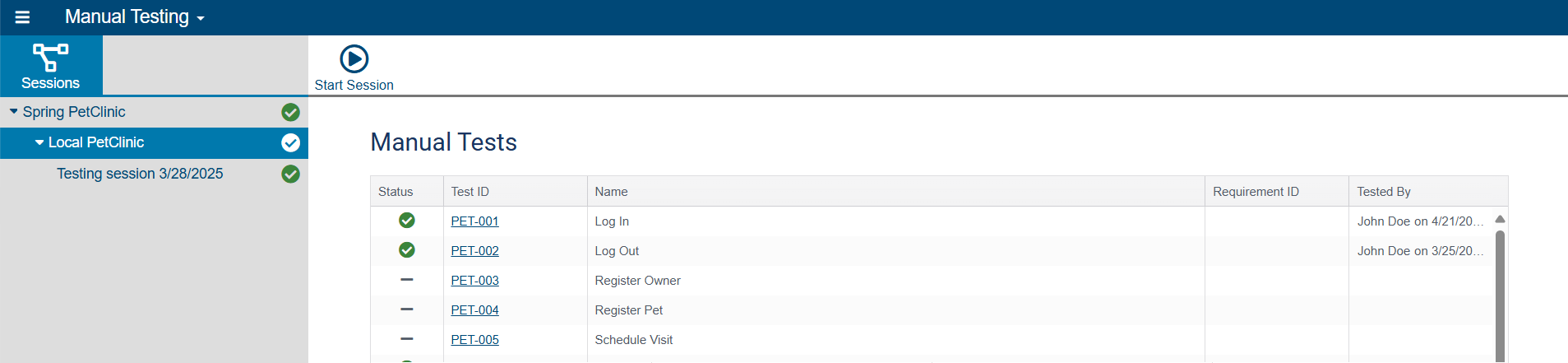
- Click Start Session and enter a name for the session in the dialog that opens. Note that the session name must be unique within the environment.
- If CTP has been configured to connect to DTP, you will also need to choose a session type.
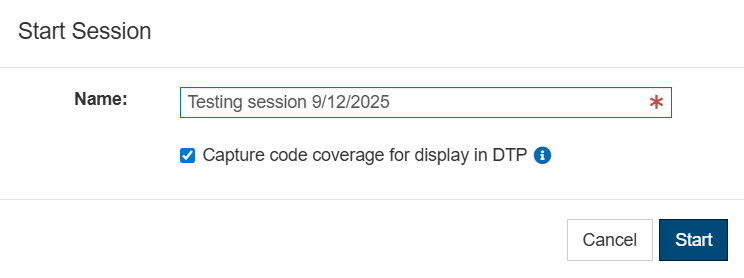
- Incremental test session without publishing to DTP: Enable if the session should prioritize manual tests that have been impacted by code changes or other incremental testing needs. Previous test results that have not been impacted by code changes will be displayed in this session. Results are not published to DTP. Incremental test sessions are not tied to a build ID and do not need to be stopped because a build ID has changed.
- Full test session for publishing coverage to DTP: Enable if all manual tests should be the performed in the session regardless of previous results or whether they are impacted by code changes. Results and coverage information can be published to DTP. Full test sessions are tied to a build ID and must be stopped when build IDs change.
- Click Start. A new session will start with your tests.
Starting a Manual Test
When you start a manual test in CTP, test data is collected as you perform the steps in the test.
If this is a full test session, you will have the opportunity to publish the test data that is collected to DTP when you're done testing. Be aware, however, that if any of the components in a system under test change to a newer build, you will not be able to start a new manual test in the manual test session. In that instance, you should publish the manual testing results that you have so far and start a new manual testing session for the updated build IDs.
If this is an incremental test session, you won't be able to publish test data to DTP, but you do not have to start a new session when a build ID changes.
Note: Each tester can only have one manual test running per environment at any time, but multiple users can run tests simultaneously in the same environment if all the coverage agents are running in multi-user mode.
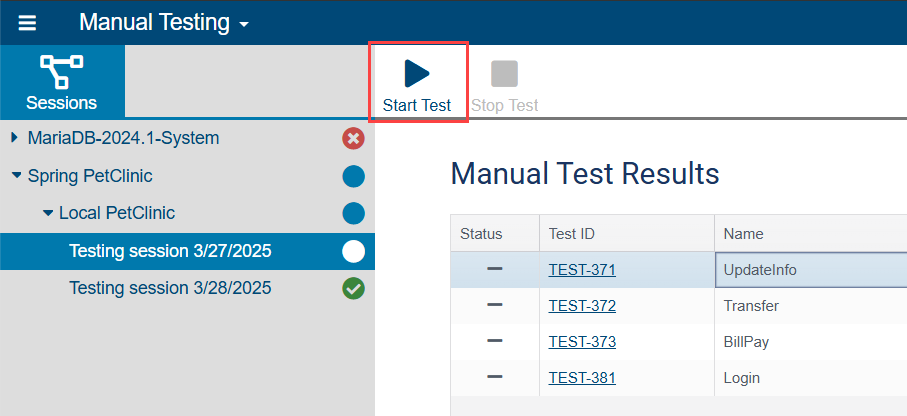
- Open the Manual Testing module. Your systems, versions (if applicable), and their environments, as defined in the Environment Manager, are listed here alphabetically. Navigate to the session with the test you want to start.
- Click the desired test in the Manual Test Results table and click Start Test.
Stopping a Manual Test
Once you're done with your manual testing, stop the test in CTP and indicate the result. Manual tests can only be stopped by the user who started them or by an administrator.
- Open the Manual Testing module. Your systems, versions (if applicable), and their environments, as defined in the Environment Manager, are listed here alphabetically. Navigate to the session with the test you want to stop.
- Click the test in the Manual Test Results table and click Stop Test. The Stop Test dialog opens.

- Click a result (Passed, Failed, or Incomplete) and add notes, if desired (for example, to explain why a test failed or could not be completed). If you publish results to DTP, notes will be included.
- You can also abort the test here by clicking Abort Test. This will stop the test without recording a result and delete any coverage data collected. You will be able to restart the test to run it again, if you want.
- Click Finish.
Stopping a Manual Test Session
When you have completed your manual tests, you can stop the session and, in the case of full test sessions, send the data that was collected to DTP. Be aware that you cannot stop a session that has a manual test running. Stop tests that are running before trying to stop a session.
- Open the Manual Testing module. Your systems, versions (if applicable), and their environments, as defined in the Environment Manager, are listed here alphabetically. Choose the environment that contains the session you want to stop.
- Click Stop Session. The Stop Session dialog opens.
- If CTP has been configured to connect to DTP, you have the option to publish the session's coverage data to DTP by enabling Publish to DTP in the dialog. Note that this only applies to full test sessions; if this is an incremental test session, this option is disabled.
You cannot publish the session to DTP after it has been stopped. If you want to publish this data to DTP, it must be done now as part of the process of stopping the session. |
- Click Stop.
Deleting a Manual Test Session
When you're done with a session, you might want to delete it. You can only delete sessions that have been stopped.
- Open the Manual Testing module. Your systems, versions (if applicable), and their environments, as defined in the Environment Manager, are listed here alphabetically. Choose the environment that contains the session you want to delete.
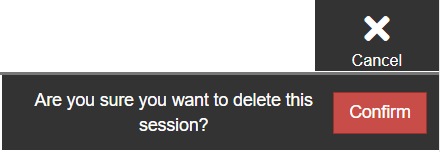
- Click Delete Session. A confirmation message appears.
- Click Confirm to delete the session or Cancel to cancel the deletion.
Manual Test Results Icons
The Manual Test Results table uses a series of icons to identify the status of manual tests. A description of what these icons signify is shown in the table below.
| Icon | Description |
|---|
| Test is in progress |
| Test passed |
| Test failed |
| Test is incomplete |
| Test has not been run |
| Test impacted by code changes and should be rerun |
Note that the manual test status icons are also used in the system tree on the left of the Manual Testing screen. Generally speaking, when a manual testing session is stopped it adopts the status of the test within it that requires the most attention (if any). For example, when a manual testing session is stopped and most manual tests have passed but one is in a failed state, the manual testing session will be flagged as "failed". Be aware that manual testing sessions that are in progress will always show as "in progress" regardless of the status of any of its tests. These statuses "roll up, so environments take the status of the manual testing session that requires the most attention, versions take the status of the environment that needs the most attention, and so on. In this way, it's easy for you to tell from the system tree, at a glance, when there is something that needs your attention and drill down to find what it is. |


